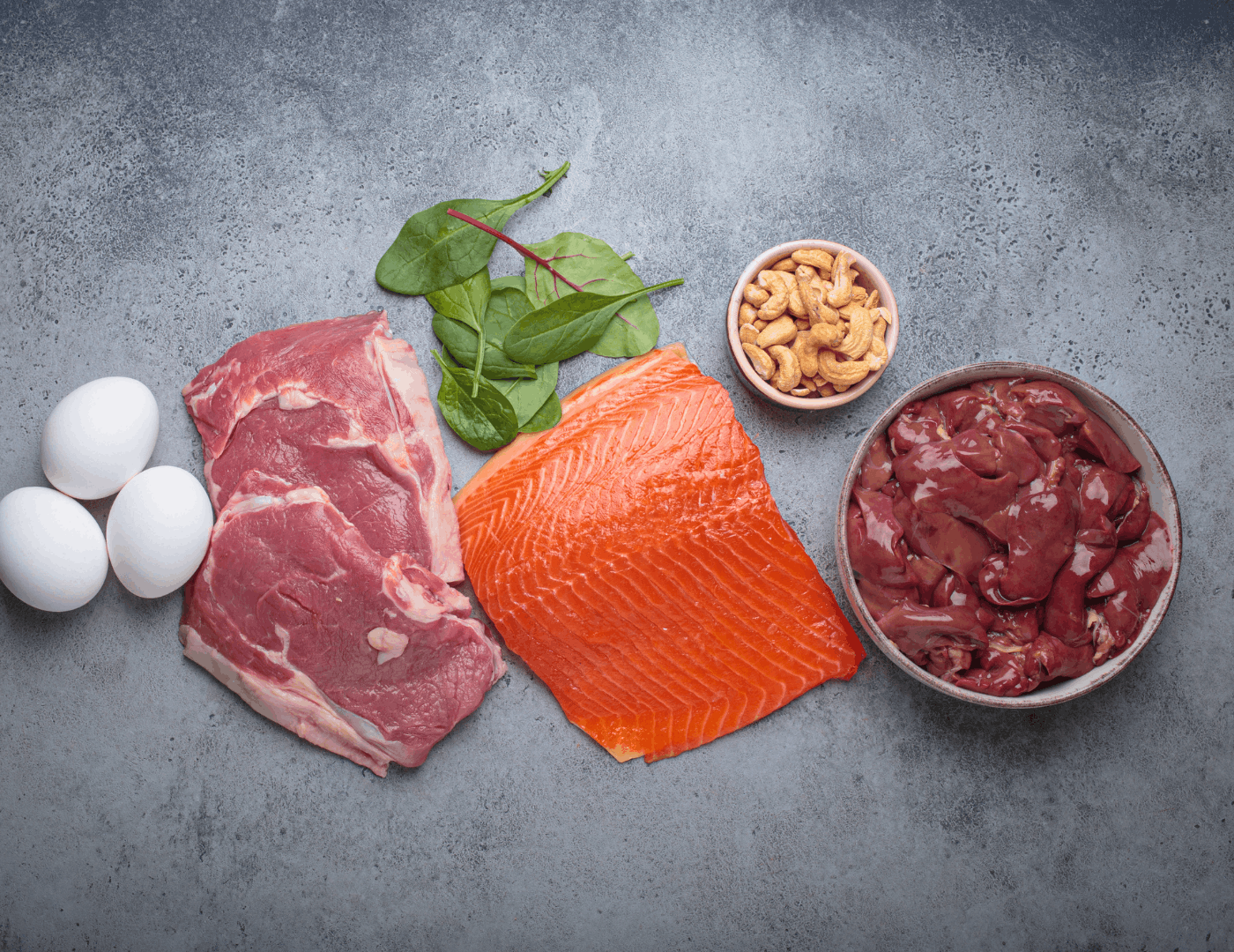
Understanding which foods are high in iron is useful. Understanding how to eat them so your body actually absorbs that iron is where most pregnancy nutrition advice stops short.
Two women eating the same meal can absorb dramatically different amounts of iron - depending on the form of iron in the food, what they pair it with and what they drink alongside it.
This blog covers the iron content of the most relevant pregnancy foods, the critical distinction between haem and non-haem iron and the evidence-based pairings that make a meaningful difference to what your body actually gets.
All dietary iron falls into one of two categories, and the difference between them is significant.
The wide range (2–20%) is the key point: non-haem iron absorption can be maximised or minimised based almost entirely on meal composition. A spinach salad with lemon dressing and capsicum will deliver meaningfully more iron than the same salad with no vitamin C and a cup of tea.
|
Food |
Iron Content |
Type |
Absorption tip |
|
Beef (lean, cooked) |
3.5mg / 100g |
Haem |
Eat with vitamin C-rich vegetables - roasted capsicum, broccoli, tomato |
|
Lamb (lean, cooked) |
2.5mg / 100g |
Haem |
Pair with leafy green salad + lemon dressing |
|
Chicken thigh (cooked) |
1.5mg / 100g |
Haem |
Avoid pairing with dairy-heavy sauces if iron is the goal |
|
Tinned sardines |
2.9mg / 100g |
Haem |
On sourdough with spinach and lemon an iron powerhouse meal |
|
Oysters (cooked) |
4–8mg / 100g |
Haem |
Check food safety guidelines for pregnancy - fully cooked only |
|
Lentils (cooked) |
3.3mg / cup |
Non-haem |
Always pair with vitamin C - tomato, capsicum, lemon juice |
|
Chickpeas (cooked) |
4.7mg / cup |
Non-haem |
Hummus with capsicum or lemon tahini dressing |
|
Firm tofu |
3.4mg / 100g |
Non-haem |
Stir-fry with broccoli and capsicum - vitamin C built in |
|
Pumpkin seeds |
2.5mg / 30g |
Non-haem |
Add to yoghurt with kiwi or berries for absorption pairing |
|
Spinach (cooked) |
3.6mg / cup |
Non-haem |
Cooked absorbs better than raw. Add lemon. Avoid with dairy. |
|
Dark chocolate (70%+) |
3.3mg / 30g |
Non-haem |
Eat with fruit - the vitamin C in berries enhances absorption |
|
Fortified breakfast cereal |
Varies - check label |
Non-haem |
Avoid eating with milk (calcium blocks absorption) - use fortified oat milk instead |
Note on oysters: Oysters are among the highest iron (and zinc) foods available, but should be consumed fully cooked in pregnancy. Raw or undercooked oysters carry a risk of Vibrio and other foodborne pathogens that is not appropriate during pregnancy.
Vitamin C - the most important enhancer
Vitamin C (ascorbic acid) enhances non-haem iron absorption through two mechanisms: it reduces ferric iron (Fe³⁺) to the more absorbable ferrous form (Fe²⁺) and it forms a soluble complex with iron that remains absorbable in the alkaline environment of the small intestine.
75-100mg of vitamin C at the same meal can increase non-haem iron absorption by 3-6 times. This is a meaningful effect that requires no supplementation - just intentional food pairing.
Foods providing 75-100mg vitamin C:
The meat factor - haem iron enhances non-haem absorption
Eating haem iron alongside non-haem iron enhances the absorption of the non-haem iron, a phenomenon called the 'meat factor'. The exact mechanism isn't fully understood, but the effect is consistently demonstrated in research.
This is one reason why mixed meals - animal protein alongside plant-based iron sources deliver more total absorbed iron than plant-based meals alone, even when the total iron content is similar.
1. Is spinach a good source of iron?: Spinach contains a reasonably high amount of iron - approximately 3.6mg per cooked cup. However, it also contains oxalates that reduce iron absorption and it is exclusively non-haem iron. Cooked spinach absorbs better than raw. Pairing with lemon juice or capsicum significantly increases the usable amount. It's worth eating, but shouldn't be relied on as a primary iron source without vitamin C pairing.
2. Is red meat necessary for iron in pregnancy? Not strictly necessary but it is the most efficient dietary iron source. Haem iron from red meat absorbs at 15-35% and is not affected by dietary inhibitors. Women who do not eat red meat can meet iron needs through other animal sources (poultry, fish) and well-planned plant-based intake, but it requires more deliberate food choices and attention to absorption factors. Iron supplementation is more important in the absence of red meat.
3. Can I get enough iron from food alone in pregnancy? For women with good iron stores at the start of pregnancy, a well-planned diet rich in haem iron alongside deliberate vitamin C pairing may be sufficient in the first and second trimester. By the third trimester, when demand peaks, most women benefit from supplemental iron regardless of diet quality. Women with low ferritin at any point should supplement under the guidance of their care provider.
Related reading
→ Part 1: Why Women Enter Pregnancy Iron Depleted
About the Author
Caitlin Gilmore: Nurse, Midwife & Nutrition Consultant
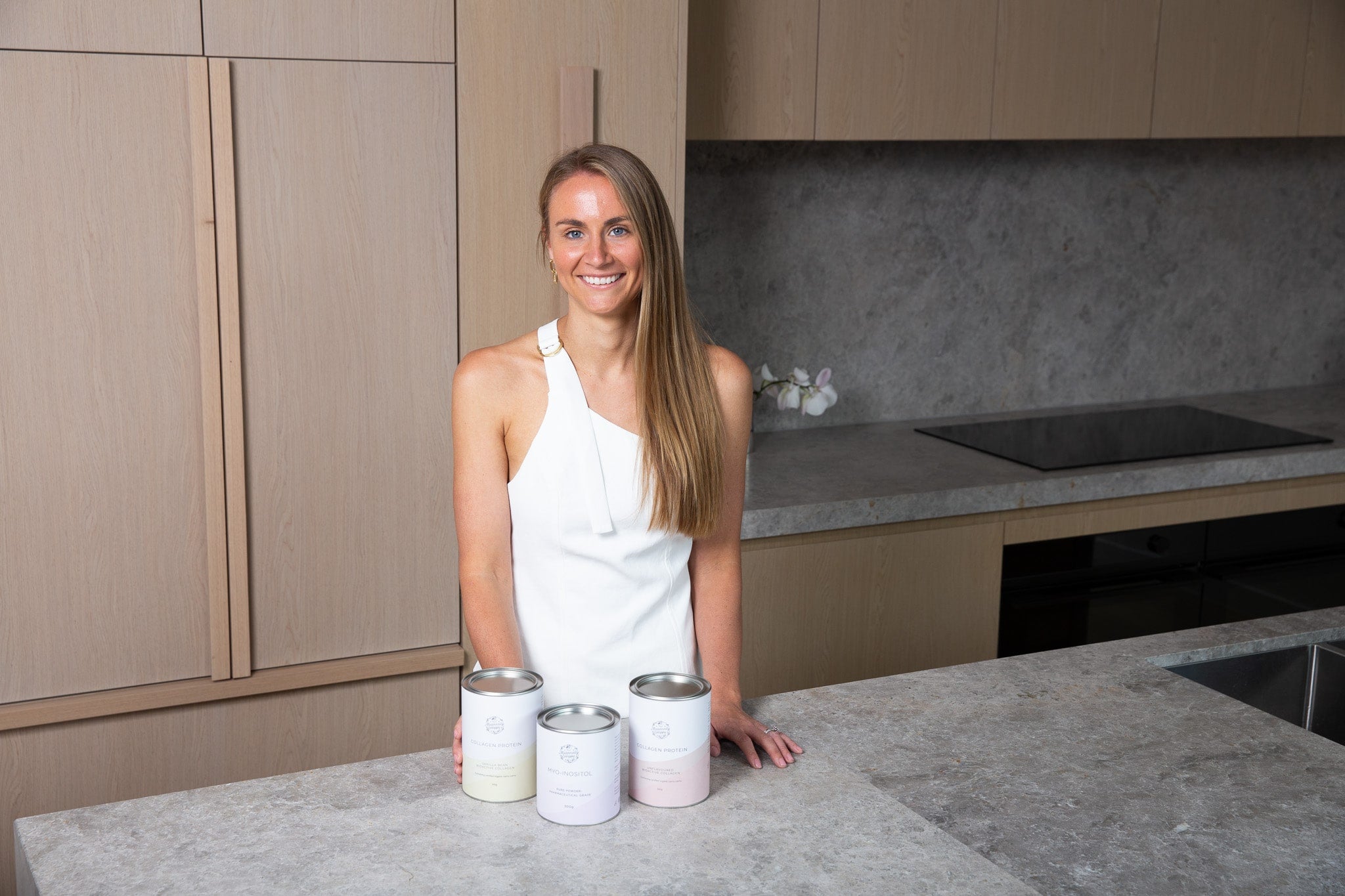
Caitlin is the founder of Maternally Happy, an Australian wellness brand specialising in bioavailable supplements, prenatal vitamins, and evidence-based resources designed to support women from preconception through postpartum.
With qualifications as a Nurse, Midwife, and Nutrition Consultant, Caitlin combines over a decade of clinical experience with nutritional expertise to deliver trustworthy, research-backed advice. Her writing focuses on fertility, pregnancy, postpartum recovery, and hormonal health - helping women cut through the confusion with practical, evidence-based information.
When she’s not formulating practitioner grade supplements or supporting her community, you’ll find her enjoying a chai latte, hiking in nature, or spending time with her family, friends, and two border collies.

How to Read Your Iron Blood Test in Pregnancy - Haemoglobin, Ferritin, Transferrin and CRP Explained
You've had your bloods done. The results are back a table of markers, numbers and reference ranges that may or may not include a note from your GP. Most women are only told about haemoglobin. But h...
Read more
Why Your Iron Might Not Be Absorbing: Cofactors & Blockers Explained
Iron deficiency is frustrating enough. Iron deficiency that doesn't improve despite consistent dietary effort and supplementation is a different level of discouraging. In most cases, the explanatio...
Read more
Short, science-backed tips to support fertility, pregnancy, and beyond - plus exclusive promotions