By Maternally Happy | Low-Tox & Lifestyle | 7 min read
Pregnancy has a way of making you look at everyday products with completely fresh eyes.
The body wash you've used for years. The moisturiser on your bathroom shelf. The frying pan you cook in every morning. Products you've never questioned suddenly feel worth a second look and that instinct is worth listening to.
During pregnancy, your skin is more permeable than usual, your liver is working harder, and the placenta while an extraordinary organ is not an impenetrable barrier. Many chemicals found in everyday personal care products can cross the placenta and enter fetal circulation.
A 2016 study published in Environment International detected over 50 different chemicals = including parabens, phthalates, and UV filters in the placentas of women who had used conventional personal care products during pregnancy.
This is not meant to alarm you. It's meant to inform you because reducing your exposure to potentially harmful ingredients in a low tox pregnancy is far simpler than most people think. You don't need to throw everything out overnight. You just need a guide. This is it.
The term 'low-tox' refers to reducing your exposure to synthetic chemicals particularly those with known or suspected links to hormonal disruption, inflammation, or developmental harm.
Outside of pregnancy, a healthy adult body has significant capacity to metabolise and eliminate many of these compounds. During pregnancy, several factors shift this equation:
The concept of endocrine disruption is central to why this matters. Endocrine disruptors are chemicals that mimic, block, or interfere with your body's hormones. During pregnancy, hormones are orchestrating virtually every aspect of fetal development - making any interference during this window particularly significant.
The first and most empowering step in a low tox pregnancy is learning to read what's actually in the products you use.
Ingredients are listed in order of concentration By law in Australia, cosmetic ingredients must be listed in descending order of concentration. The first five to seven ingredients make up the bulk of the product. Start there.
'Natural' and 'organic' claims are largely unregulated In Australia, there is no legal definition of 'natural' or 'clean' on personal care labels. A product can call itself natural while containing synthetic fragrance, parabens, or petroleum derivatives. The only reliable way to assess a product is to read the full ingredient list - not the marketing copy on the front.
You don't need to change everything at once. Start with the products you use most frequently and that cover the largest surface area of skin - body wash, moisturiser, and shampoo are the highest priority.
| Category | Swap Out | Swap In | Brand |
|---|---|---|---|
| Body oil & wash | Conventional products with fragrance, mineral oil | The Oil + The Wash | MH ★ |
| Facial skincare / SPF | Parabens, oxybenzone, synthetic fragrance | Inika Organics - certified organic, typically pregnancy-safe | Inika |
| Shampoo & conditioner | Sulphates, silicones, synthetic fragrance | Mukti Organics - natural, Australian-made | Mukti |
| Moisturiser | Fragrance, mineral oil, PEGs | Eco by Sonya - vegan, Australian-made | Eco by Sonya |
| Drinking water | Unfiltered tap water | Village Pottery ceramic filter or Waters Co | Both great |
| Cookware | Non-stick (PFAS/Teflon) pans | Baccarat stainless steel | Baccarat |
| Underwear & bras | Synthetic fabrics next to skin all day | Stone & Kin or Pact - organic cotton | Both great |
| Hydration bottle | Plastic bottles — BPA and plasticisers | MH Glass Hydration Bottle - borosilicate glass | MH ★ |
★ MH = Maternally Happy product
Conventional body oils often contain mineral oil (petroleum-derived), synthetic fragrance, or nut oils that can be problematic for those with allergies or sensitivities.
The Maternally Happy The Oil is organic, vegan, and nut-oil-free - formulated specifically for pregnancy and newborn skin. The Wash is fragrance-free, allergen-free, and gentle enough for daily use from bump to baby. Both are Australian-made.
→ Shop The Natural Skin Collection
Conventional SPF products are particularly problematic - many contain oxybenzone and octinoxate, which are detected in breast milk and associated with hormonal disruption. Switch to mineral SPF containing zinc oxide or titanium dioxide. For overall skincare, Inika Organics is one of the most rigorously certified organic ranges available in Australia.
Given daily use and scalp absorption, shampoo is worth switching. Look for sulphate-free, silicone-free formulations without synthetic fragrance. Mukti Organics is an Australian-made, certified organic option with strong formulations across both shampoo and conditioner.
Moisturiser sits on the skin for hours - making it one of the highest absorption-risk categories in a low tox pregnancy routine. Eco by Sonya is a vegan, Australian-made range free from synthetic fragrance, parabens and petroleum derivatives.
Tap water in Australia is generally safe, but it does contain chlorine, fluoride, and in some areas, traces of heavy metals. Filtering your drinking water is a simple, low-effort way to reduce your chemical load meaningfully. Village Pottery ceramic filters and Waters Co filtration systems are both solid choices.
Non-stick cookware coated with PTFE (Teflon) releases per- and polyfluoroalkyl substances (PFAS) when heated - particularly when overheated or scratched. PFAS are persistent chemicals that accumulate in body tissue and have been detected in cord blood. Switching to stainless steel is one of the most significant low tox pregnancy upgrades you can make.
Synthetic fabrics - polyester, nylon, spandex - sit against your most sensitive skin all day, often treated with chemical dyes and finishing treatments not disclosed on the label. Organic cotton from Stone & Kin or Pact is soft, breathable, and made with non-toxic dyes.
Plastic water bottles even BPA-free ones - can leach plasticisers into water, particularly when exposed to heat or UV light. The Maternally Happy Glass Hydration Bottle is 800mL borosilicate glass durable, non-leaching, and practical for all-day hydration.
→ Shop the Glass Hydration Bottle
The goal of going low-tox is not perfection, it's reduction. Every swap reduces your overall toxic load, and the cumulative effect of multiple small changes is significant.
A practical order to work through:
Use the EWG Skin Deep database (ewg.org/skindeep) or the Think Dirty app to check products you already own - both are free tools that score personal care products based on ingredient safety.
This course covers personal care and household essentials - but going low tox in pregnancy is a much broader topic than skincare and water bottles.
The Maternally Happy Low Tox Course covers your entire home environment: cleaning products, food storage, plastics, air quality, laundry, cookware and more through a calm, practical, non-overwhelming lens. No scaremongering, no impossible standards just clear, evidence-informed guidance on where to focus your energy.
What does low tox mean in pregnancy? Low tox pregnancy refers to reducing your exposure to synthetic chemicals - particularly endocrine disruptors, preservatives, and petroleum-derived ingredients found in everyday personal care and household products. During pregnancy, your skin is more permeable, your baby's systems are more vulnerable, and the placenta does not block many chemical compounds. Reducing your toxic load during this window is one of the most meaningful steps you can take for both your health and your baby's development.
Is Australian tap water safe to drink during pregnancy? Australian tap water meets national drinking water standards and is generally considered safe. However, it does contain chlorine, fluoride, and in some areas traces of heavy metals. Filtering your drinking water is a low-risk, low-effort step that reduces chemical load meaningfully during pregnancy.
Are essential oils safe in pregnancy skincare? Not all essential oils are safe during pregnancy. Some including clary sage, rosemary, peppermint in high concentrations, and certain citrus oils are best avoided, particularly in the first trimester. Fragrance-free formulations are the safest choice for a low tox pregnancy skincare routine.
Is mineral SPF safe in pregnancy? Yes. mineral SPF containing zinc oxide or titanium dioxide is the safest sunscreen option during pregnancy. Unlike chemical UV filters such as oxybenzone and octinoxate, mineral filters sit on the surface of the skin and reflect UV rays rather than absorbing into the bloodstream.
Are non-stick pans really that harmful in pregnancy? The risk from PTFE (Teflon) non-stick coatings is greatest when pans are overheated or the coating is scratched. PFAS compounds used in non-stick manufacturing are persistent chemicals with documented health concerns and have been detected in cord blood. Switching to stainless steel removes the risk entirely.
Is 'fragrance-free' the same as 'unscented'? No, and this distinction matters for low tox pregnancy. 'Unscented' products may contain masking fragrances to neutralise natural ingredient smells. 'Fragrance-free' means no fragrance ingredients have been added. Always look specifically for 'fragrance-free' rather than 'unscented'.
About the Author
Caitlin Gilmore: Nurse, Midwife & Nutrition Consultant
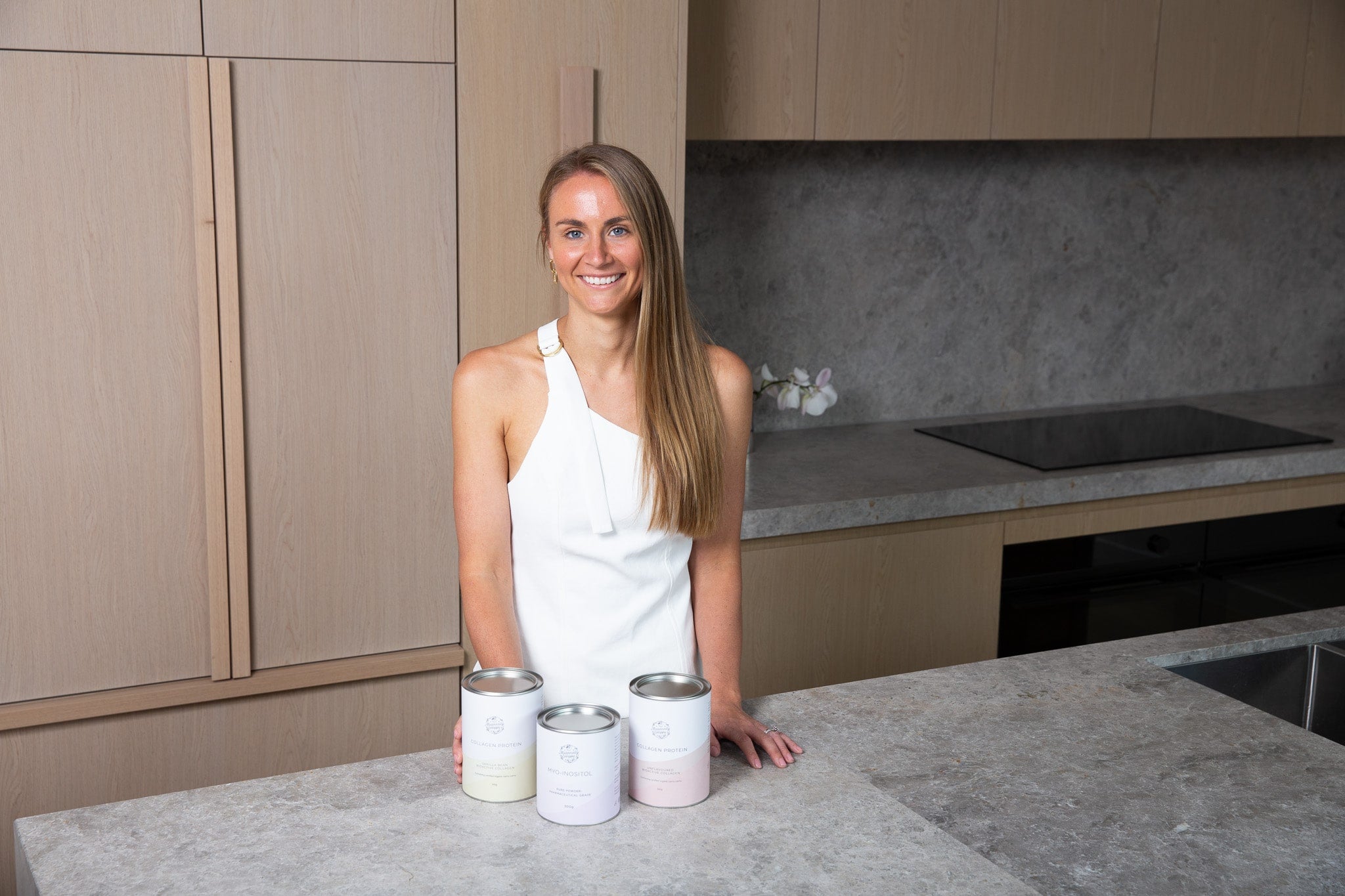
Caitlin is the founder of Maternally Happy, an Australian wellness brand specialising in bioavailable supplements, prenatal vitamins, and evidence-based resources designed to support women from preconception through postpartum.
With qualifications as a Nurse, Midwife, and Nutrition Consultant, Caitlin combines over a decade of clinical experience with nutritional expertise to deliver trustworthy, research-backed advice. Her writing focuses on fertility, pregnancy, postpartum recovery, and hormonal health - helping women cut through the confusion with practical, evidence-based information.
When she’s not formulating practitioner grade supplements or supporting her community, you’ll find her enjoying a chai latte, hiking in nature, or spending time with her family, friends, and two border collies.
Collagen in Pregnancy: What It Does and Is It Safe?
Collagen in pregnancy goes far beyond skin. From pelvic floor support to blood sugar stabilisation and postpartum recovery, here's the evidence-based guide.
Read more
Why So Many Women Enter Pregnancy Iron Depleted - Periods, Diet and Previous Pregnancies
Iron deficiency is the most common nutritional deficiency in the world and in pregnancy, it affects up to 50% of women globally. In Australia, the figure is similarly significant, with many women a...
Read more
Short, science-backed tips to support fertility, pregnancy, and beyond - plus exclusive promotions