

By Maternally Happy | Nutrition & Pregnancy Health | 6 min read
Collagen supplements are often marketed as a beauty product and while the skin benefits are real, positioning collagen in pregnancy as primarily a skincare supplement significantly undersells what it does.
Collagen is the most abundant protein in the human body, approximately 30% of your total protein content. It's the structural scaffolding of your skin, tendons, ligaments, cartilage, bones, blood vessels and importantly your pelvic floor.
During pregnancy, collagen is under increased demand. Your body is building new connective tissue at an accelerated rate, supporting a rapidly expanding uterus, stretching skin and fascia, and preparing the pelvic floor and ligaments for the mechanical demands of birth.
Understanding the role of collagen in pregnancy makes it easier to see why hydrolysed collagen supplementation is one of the most clinically grounded additions to a pregnancy routine.
Pregnancy triggers significant hormonal and physiological shifts that affect collagen metabolism directly.
The hormone relaxin increases dramatically in pregnancy, particularly in the first trimester and again around birth. Relaxin softens and loosens ligaments throughout the body in preparation for birth, which is physiologically necessary but also creates joint instability, pelvic girdle pain and general connective tissue laxity.
This increased ligament laxity places greater mechanical demand on the remaining connective tissue making the quality of that tissue more important, not less.
The skin of the abdomen, breasts, and hips stretches significantly over the course of pregnancy, more than it has likely ever been asked to stretch. The skin's capacity to stretch without breaking down is directly related to its collagen content and quality.
The pelvic floor supports the weight of your uterus, baby, placenta, and amniotic fluid for 9 months then accommodates the passage of a baby during vaginal birth. The integrity of the pelvic floor is fundamentally a connective tissue question and connective tissue is built from collagen.
Stretch marks (striae gravidarum) occur when the skin stretches faster than collagen can be synthesised to maintain integrity, causing tears in the dermal matrix. While genetic predisposition plays a significant role, collagen supplementation supports the skin's intrinsic capacity to stretch.
A 2019 randomised controlled trial found that hydrolysed collagen supplementation significantly improved skin elasticity and hydration directly reducing the mechanical vulnerability that leads to stretch marks.
Several clinical trials have demonstrated that hydrolysed collagen supplementation particularly when combined with vitamin C supports collagen synthesis in joints and connective tissue. This is particularly relevant in pregnancy, where relaxin-induced ligament laxity increases joint vulnerability.
Women experiencing symphysis pubis dysfunction (SPD) or pelvic girdle pain may find collagen in pregnancy supportive alongside physiotherapy.
Hydrolysed collagen is a high-quality protein source. Protein slows gastric emptying, blunts post-meal blood glucose spikes and supports sustained satiety making collagen a practical daily tool for blood sugar management throughout pregnancy.
This is why we pair Collagen with Myo-Inositol in the Blood Sugar Bundle. Myo-Inositol supports insulin signalling at the cellular level; collagen provides the protein that prevents glucose spikes in the first place.
→ Read: Blood Sugar in Pregnancy: What Every Pregnant Woman Needs to Know
The pelvic floor experiences significant trauma during vaginal birth even in uncomplicated deliveries. The specific amino acids in hydrolysed collagen - glycine, proline, and hydroxyproline are the primary building blocks used to rebuild connective tissue.
Starting collagen supplementation during pregnancy means your amino acid reserves are well established going into birth and the recovery period that follows.
Standard collagen protein has a large molecular weight that limits gut absorption. Hydrolysed collagen, also called collagen peptides has been enzymatically broken down into smaller chains that are absorbed more efficiently and delivered to target tissues more effectively.
Research using radiolabelled collagen peptides has demonstrated that hydrolysed collagen accumulates in skin, cartilage and connective tissue after oral supplementation providing meaningful evidence that it reaches the tissues where it's needed.
How to take hydrolysed collagen in pregnancy:
Hydrolysed collagen is a food-derived protein supplement derived from the connective tissue of animals (typically bovine or marine sources). It has a strong safety profile and is not associated with adverse effects at normal supplementation doses.
There are no known contraindications to hydrolysed collagen use during pregnancy. It is listed as generally recognised as safe (GRAS) and is widely used by pregnant and breastfeeding women.
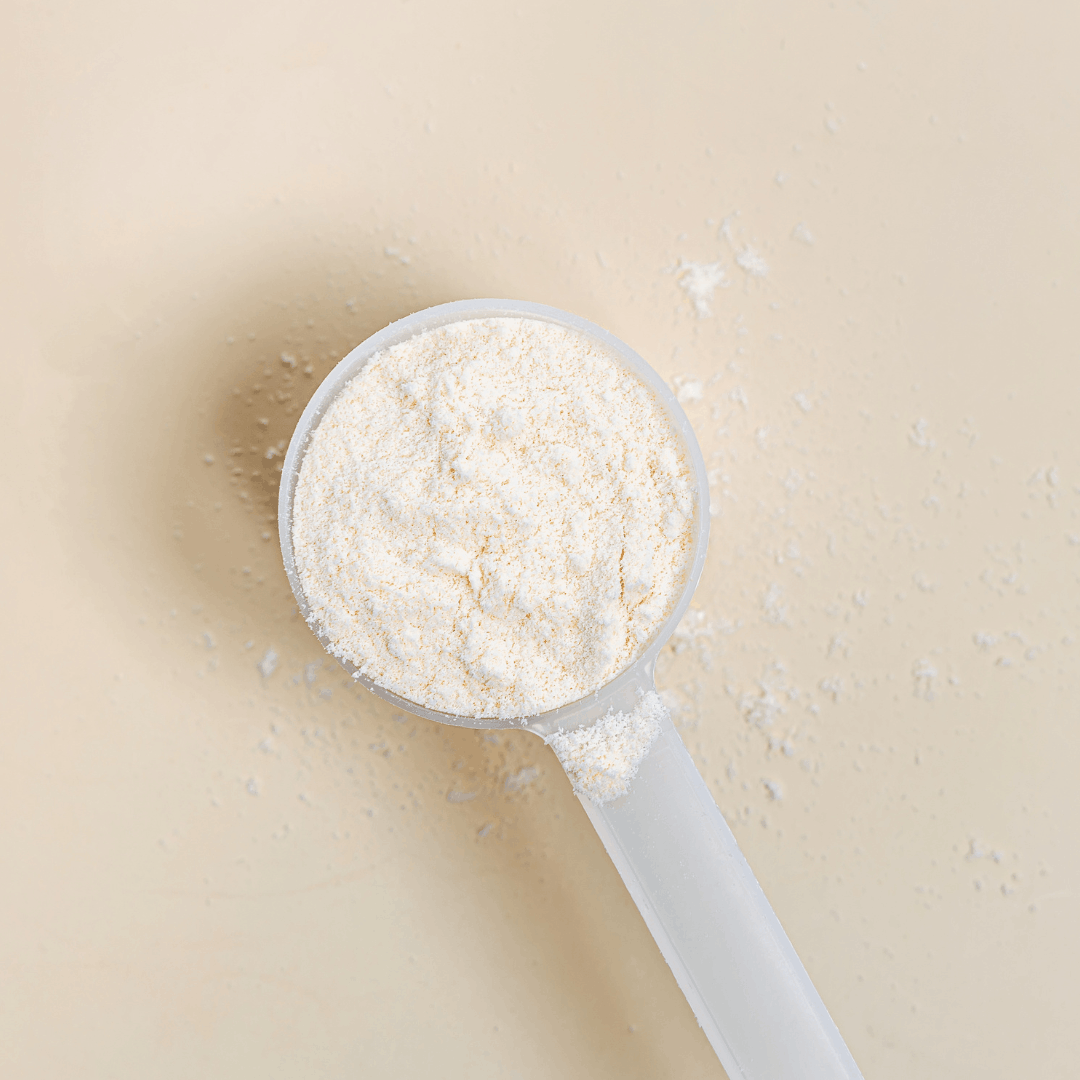
As with all supplementation during pregnancy, choose a product with transparent ingredient labelling, third-party testing and no artificial additives. Our Hydrolysed Collagen is free from fillers, binders and artificial flavours and available in Vanilla Bean and Unflavoured.
If you have specific concerns about supplementation during your pregnancy it is important to discuss with your midwife or GP.
Is collagen safe to take during pregnancy? Hydrolysed collagen is a food-derived protein with a strong safety profile and no known contraindications in pregnancy. It is widely used by pregnant and breastfeeding women and is listed as generally recognised as safe (GRAS). As always, choose a product with transparent labelling and discuss with your midwife or GP before supplementing.
Can collagen help prevent stretch marks in pregnancy? Collagen supplementation supports skin elasticity and hydration, which directly reduces the mechanical vulnerability that leads to stretch marks. A 2019 randomised controlled trial found hydrolysed collagen significantly improved skin elasticity. While genetics play a role, maintaining strong collagen levels gives your skin the best chance of stretching without tearing.
What does collagen do for the pelvic floor during pregnancy? The pelvic floor is connective tissue and connective tissue is built from collagen. Hydrolysed collagen provides the specific amino acids (glycine, proline, hydroxyproline) needed to maintain and rebuild pelvic floor integrity throughout pregnancy and after birth.
When should I start taking collagen in pregnancy? Collagen can be taken throughout all trimesters. Starting early means your amino acid reserves are well established before the third trimester, when mechanical demand on connective tissue is highest, and before birth, when pelvic floor recovery begins.
What is the difference between hydrolysed collagen and regular collagen? Hydrolysed collagen (collagen peptides) has been enzymatically broken down into smaller chains that are absorbed more efficiently than standard collagen protein. Research shows hydrolysed collagen accumulates in skin, cartilage, and connective tissue after supplementation, meaning it reaches the tissues where it's needed.
Can I take collagen while breastfeeding? Yes. Hydrolysed collagen is safe during breastfeeding. It supports postpartum connective tissue recovery, pelvic floor healing, and provides a convenient protein source during a period when many new mothers struggle to meet their protein needs.
About the Author
Caitlin Gilmore: Nurse, Midwife & Nutrition Consultant

Caitlin is the founder of Maternally Happy, an Australian wellness brand specialising in bioavailable supplements, prenatal vitamins, and evidence-based resources designed to support women from preconception through postpartum.
With qualifications as a Nurse, Midwife, and Nutrition Consultant, Caitlin combines over a decade of clinical experience with nutritional expertise to deliver trustworthy, research-backed advice. Her writing focuses on fertility, pregnancy, postpartum recovery, and hormonal health - helping women cut through the confusion with practical, evidence-based information.
When she’s not formulating practitioner grade supplements or supporting her community, you’ll find her enjoying a chai latte, hiking in nature, or spending time with her family, friends, and two border collies.

Morning Sickness and Nutrition: How to Keep Your Nutrients Up When Food Is the Enemy
Struggling to eat in the first trimester? Learn which nutrients matter most during pregnancy, practical strategies for keeping them up through morning sickness, and how to support your baby's devel...
Read more
Low Tox Pregnancy: The Complete Product Swap Guide
Going low-tox in pregnancy doesn't have to be overwhelming. Here's the practical guide to the 8 most important swaps, what ingredients to avoid, and brands to trust.
Read more
Short, science-backed tips to support fertility, pregnancy, and beyond - plus exclusive promotions